Teacher’s Day is just around the corner here in Singapore — and this year, I want to invite you to celebrate it a little differently. What if the most important teacher you’ll ever have is already within you? A reflection on inner wisdom, the lessons of nature, and the teachers we often overlook.
Every year on Teacher’s Day, we think of someone outside ourselves.
A beloved schoolteacher. A mentor who changed our path. A coach, a guide, a parent. And yes — these people deserve to be honoured. Deeply.
But today, I want to invite you to widen the lens.
The teacher is not always external.
In the traditions I’ve studied and practised — meditation, Reiki, Ayurveda, Yoga, Qigong, Zen — there is a thread that runs through all of them: the answers are already within you. The teacher outside points the way. But the real learning happens in the quiet space inside.
You have been your own teacher more times than you realise.
Every time you paused before reacting. Every time you listened to your body when it said slow down. Every time you chose rest over pushing through. Every time you trusted your gut, even when it made no logical sense — that was you, teaching yourself.
The inner teacher doesn’t shout. She whispers. She shows up in the pause between breaths, in the moment before sleep, in the ache that tells you something needs to change.
Are you listening?
Nature is a teacher too.
I’ve learned as much from a tree as I have from any book.
Watch how a tree doesn’t resist the wind — it bends, and then returns to itself. Watch how water finds its way around every obstacle without force. Watch how a flower doesn’t apologise for blooming.
Animals, too, carry wisdom we’ve forgotten. The cat who sleeps without guilt. The dog who greets each morning as if it’s the first. The bird who sings before the sun has fully risen — not because anyone is listening, but because that is its nature.
These are not metaphors. They are teachings, if we are willing to receive them.
And then there are the human teachers — the unexpected ones.
Not just the ones with credentials or classrooms. The stranger who said exactly what you needed to hear. The child who asked a question that stopped you in your tracks. The difficult person who revealed something in you that needed to be seen.
Every encounter is a classroom, if we approach it with openness.
On this Teacher’s Day, I honour:
The teachers who shaped me in formal spaces
The mentors who believed in me before I believed in myself
The animals and the natural world, who teach without words
And the quiet, steady teacher within — the one who has never left
May we all become better students of our own lives.
With love,Esther — Meditation Coach, Reiki Master, Ayurvedic Life-Style Consultant, and practitioner of Yoga, Qigong, and Zen Traditions
When I set out to rebuild Senseful Crafts, I was told my following was too small, my business too new, and that compromise was just “how it’s done now.” As a Meditation Coach and Reiki Master, I’ve learned that worthiness is never granted from the outside. So I went back to basics — and started making the candles myself.
Someone once told me I needed to prove my worthiness before he would sell to me.
He meant Instagram followers. I heard something else entirely.
When I decided to rebuild Senseful Crafts, I knew candles had to be at the heart of it. They had been part of my world for years — not just as products, but as objects of intention. A lit candle in a meditation space changes the energy of the room. It marks the beginning of something. It says: this moment matters.
So when I set out to source candles I could stand behind, I started with someone I had trusted before — a supplier in the USA whose work I had loved. But time had moved on. She had downscaled, and was no longer shipping overseas. That door had quietly closed.
I reached out to others. Most didn’t reply at all. One finally responded — not with a price list, but with a condition. My business was too new, he said. My Instagram following too small. He would consider whether I was worthy to carry his products once I had grown enough for him to assess me.
I sat with that for a long moment.
As someone who has spent years studying and teaching meditation, Reiki, and Ayurvedic wisdom, I’ve come to understand something deeply: worthiness is not conferred from the outside. It is not a follower count. It is not a metric. It is something you embody — through your choices, your integrity, and the quiet consistency of how you show up.
I chose to keep going.
Another supplier was willing to work with me — but only if I accepted beeswax in the blend. Synthetic chemicals too. “This is just how it’s done now,” he said, with the confidence of someone who had stopped questioning it long ago.
I thanked him and said no.
I knew pure plant wax candles were possible. I had held them. I had burned them. The fact that the market had drifted toward compromise didn’t mean I had to drift with it. In my practice — whether in a meditation session, a Reiki treatment, or an Ayurvedic consultation — I have always believed that what we bring into our space matters. What we breathe matters. What we invite into a moment of stillness matters.
A candle made with synthetic chemicals and animal-derived wax is not the candle I want in that space.
So I went back to basics. I researched. I tested. I sourced every ingredient with the same care I bring to everything else I do. And I learned to make them myself — small batch, by hand, with nothing in them that I wouldn’t be comfortable with in my own home.
Every Senseful Crafts candle is the result of that decision. It is, in its own quiet way, an act of refusal — a refusal to let convenience override conscience, or to let someone else’s definition of worthiness determine what I create.
If you’ve ever held one of our candles, you’re holding that story.
And if you’ve ever been told you need to prove yourself before you’re taken seriously — I hope this reminds you that the most important proof is always in what you choose to do next.
Always giving, rarely receiving — sound familiar? A honest reflection on why filling your own cup first isn’t selfish, and how small rituals can bring you back to yourself.
There are days when I show up for everyone.
For the friend who needs to talk. For the colleague who needs help. For the customer who needs reassurance. I show up — fully, willingly, wholeheartedly.
And then there are days when I need someone to show up for me.
Those days, the silence is loud.
I’ve sat with that feeling for a while now. The quiet ache of being the one who gives, and the strange loneliness of realising that the energy doesn’t always flow back. It’s not bitterness — it’s just an honest observation. And I think many of us, especially those who lead with care, know exactly what this feels like.
It’s part of why Senseful Crafts exists.
Not just to make beautiful things — but to create small rituals that remind us to come back to ourselves. A candle lit in a quiet moment. A crystal held in a still hand. A journal page filled with words no one else needs to read. These aren’t luxuries. They’re lifelines.
You cannot pour from an empty cup.
We say it. We share it. And yet — how often do we actually live it?
Filling your own cup first isn’t selfish. It’s the most responsible thing you can do for everyone around you. When you are rested, grounded, and whole, you give from abundance — not from depletion.
So today, I want to ask you gently: When did you last do something just for you?
Not for productivity. Not for anyone else. Just for the quiet restoration of your own spirit.
If the answer is “I can’t remember” — that’s your sign.
Light the candle. Hold the stone. Write the page. Start small. Start now.
You don’t need a dedicated room or expensive crystals. What you need is intention — and a small corner of your world that you’ve decided to treat differently.
You don’t need a dedicated room. You don’t need expensive crystals or a perfectly curated altar. What you need is intention — and a small corner of your world that you’ve decided to treat differently.
A sacred space is simply that: a space you’ve made sacred. It’s where you come to breathe, to reset, to remember who you are beneath the noise of the day.
Here’s how to create one, whatever your budget or living situation.
Start With What You Already Have
Before you buy anything, look around. A sacred space can begin with:
A windowsill that catches morning light
A small tray or plate to gather meaningful objects
A candle — even a simple one — that you light only in this space
A journal you write in here and nowhere else
The act of designating a space is what makes it sacred. Not what’s in it.
Layer in Meaning Slowly
Each object should earn its place — not because it looks good, but because it means something to you.
Free or found: A stone, shell, or leaf from a meaningful walk. A photo of someone whose energy you want near you. A handwritten word or quote that anchors you.
Under $20 SGD: A small tumbled crystal. A stick of incense or a tea light. A small plant or cutting from your garden.
When you’re ready to invest: A hand-poured candle with a scent that signals this is my time. A palm stone to hold during meditation. A journal with pages that feel worthy of your thoughts.
The Ritual Matters More Than the Objects
An affordable candle lit with full presence will do more for you than a very expensive exquisite crystal placed without thought.
What makes a sacred space work is the ritual of returning to it. Even five minutes. Even just sitting quietly, lighting your candle, and taking three slow breaths before the day begins. That small, consistent act of showing up for yourself — that’s where the real magic lives.
A Few Things I’ve Learned
After years of working with energy, Reiki, and Ayurvedic principles, the spaces that hold the most power are rarely the most elaborate. They’re the ones tended with care. The ones returned to again and again.
Your sacred space doesn’t have to be Instagram-worthy. It just has to be yours.
Where to Begin Today
Pick one surface. Clear it. Place one object that means something to you. Light a candle if you have one.
That’s it. You’ve begun.
Sometimes we know something is calling us, but we’re not sure where to start. Over the years, the most powerful shifts I’ve witnessed haven’t come from the perfect crystal or the right ritual — they’ve come from someone finally feeling heard and guided.
If that’s where you are, I’d love to sit with you in that. I hold virtual wellness consultations through Senseful Crafts as a quiet, unhurried space to explore what resonates for you. Come as you are.
Learn why putting yourself first isn’t selfish—it’s essential. Discover the oxygen mask principle and practical ways to prioritize your wellbeing so you can show up fully for others.
We’ve all heard the airplane safety instruction: in case of emergency, put on your own oxygen mask before helping others. It’s practical advice for survival at 30,000 feet. It is also one of the most profound lessons for living a sustainable, compassionate life on the ground.
Yet so many of us resist this wisdom. We pour ourselves into caring for others—family, friends, colleagues, and communities. We keep going until we’re running on empty. We wonder why we feel depleted, resentful, or burned out.
The truth is simple but often uncomfortable: you cannot give what you don’t have. And trying to save others while neglecting yourself isn’t noble—it’s unsustainable.
The Cost of Self-Neglect
When we consistently prioritize others’ needs over our own, we pay a price. Exhaustion becomes our baseline. Stress accumulates. Joy fades. We become less patient, less present, less effective in the very roles we’re trying to fulfill.
In Singapore’s high-pressure culture, this pattern is especially common. We’re taught to work hard, sacrifice for family, and push through discomfort. Self-care can feel selfish or indulgent. It can seem like something we’ll get to “later.” We plan to address it when things slow down. We will do it when we’ve achieved enough. It happens when everyone else is okay.
But later never comes. And meanwhile, we’re running on fumes.
Reframing Self-Care
Saving yourself first isn’t selfish—it’s strategic. It’s recognizing that your wellbeing is the foundation. It underlies everything else you want to do and everyone you want to support.
Think of it this way: you are the well from which others drink. If the well runs dry, no one benefits. But when you tend to the well—filling it with rest, nourishment, joy, and presence—there’s abundance to share.
Self-care isn’t about bubble baths and spa days (though those can be lovely). It’s about the daily, unglamorous work of meeting your own needs. This includes getting enough sleep, eating well, and moving your body. It also involves setting boundaries, asking for help, and creating space for stillness.
Practical Ways to Save Yourself First
1. Start Your Day for You Before you check messages, emails, or dive into others’ needs, give yourself 10-15 minutes. Light a candle, sit in silence, journal, or simply breathe. This small act signals that your wellbeing matters.
2. Set Boundaries Without Guilt Saying no to others is saying yes to yourself. You don’t need to justify every boundary. “I’m not available” is a complete sentence. Protect your time and energy like the precious resources they are.
3. Check In With Yourself Daily Ask: What do I need right now? Am I hungry, tired, overwhelmed, lonely? Treat yourself with the same care and attention you’d offer a loved one. Use a journal to track patterns and honor your needs.
4. Create Non-Negotiable Rituals Identify 1-2 practices that restore you—meditation, walking, reading, creative time—and make them non-negotiable. Schedule them like important meetings. Your wellbeing is that important.
5. Release the Guilt You are not responsible for everyone’s happiness, success, or comfort. You can care deeply and still prioritize your own needs. In fact, you must. Let go of the belief that your worth is measured by how much you sacrifice.
The Ripple Effect
Here’s what happens when you save yourself first: you show up more fully. You have more patience, clarity, and energy. You model healthy boundaries for others. You become a source of genuine support rather than resentful obligation.
Your children learn that self-care is normal, not selfish. Your friends see that it’s okay to prioritize wellbeing. Your colleagues witness sustainable work habits. The people around you benefit not despite your self-care, but because of it.
Tools to Support Your Journey
At Senseful Crafts (www.sensefulcrafts.com), we create tools to anchor your self-care practice. We offer candles to mark sacred pauses. Our journals are for reflection. We provide crystals for grounding. Meditation malas are available to guide your breath. Each piece is a reminder that tending to yourself is not optional; it’s essential.
Your Permission Slip
If you’ve been waiting for permission to prioritize yourself, here it is: You are allowed to rest. You are allowed to say no. You are allowed to put yourself first without explanation or apology.
Not because you’ve earned it through endless sacrifice, but because you’re human. Because your wellbeing matters. Because you cannot pour from an empty cup.
Save yourself first. Care for yourself not instead of caring for others. This way, you can care for them sustainably and joyfully. You will be doing so from a place of abundance rather than depletion.
The oxygen mask principle isn’t just for emergencies. It’s for every single day.
Explore Senseful Crafts collection of self-care tools at upcoming fairs and pop-ups.
Navigate the year-end season with grace through mindfulness practices. Discover simple ways to stay present, reduce stress, and find peace amidst the holiday chaos.
The end of the year often brings a whirlwind of activity—holiday gatherings, year-end deadlines, and the pressure to finish strong. Amidst the chaos, mindfulness becomes not just a practice, but a necessity for maintaining balance and inner peace.
Why Year-End Mindfulness Matters
As we rush toward the new year, it’s easy to lose ourselves in the doing and forget the being. Mindfulness helps us stay present, reduce stress, and approach the season with gratitude rather than overwhelm.
Simple Mindfulness Practices for December
Morning Moments of Stillness
Before diving into your day, spend 5-10 minutes in quiet reflection. Light a candle, practice deep breathing, or simply sit with your morning tea without distractions. This sets a calm tone for whatever the day brings.
Mindful Movement
Whether it’s a gentle yoga flow, a walk in nature, or stretching at your desk, bring awareness to your body. Notice sensations, release tension, and reconnect with yourself physically.
Gratitude Journaling
Each evening, write down three things you’re grateful for from the day. This simple practice shifts your focus from what’s lacking to what’s abundant in your life.
Digital Detox Hours
Set boundaries with technology. Designate phone-free times during meals, before bed, or during family gatherings to be fully present with those around you.
Mindful Breathing Breaks
Throughout your day, pause for three deep breaths. Inhale calm, exhale stress. These micro-moments of mindfulness accumulate into greater peace.
Creating Your Mindful Space
Designate a corner of your home as a mindfulness sanctuary. Add elements that support your practice. Use crystals for grounding energy. Incorporate candles for ambiance. Place a comfortable cushion and perhaps keep a journal for reflection.
Embracing Imperfection
Remember, mindfulness isn’t about perfection. Some days you’ll feel centered; other days, scattered. Both are okay. The practice is simply noticing, without judgment, and gently returning to the present moment.
As this year closes, give yourself permission to slow down, breathe deeply, and be present. The greatest gift you can give yourself this season is the gift of your own peaceful presence.
A walk refreshes not only your mind and body but also your perspectives on anything. Sitting down too long and working on something can, at times, cause a block or murky feelings. Just taking a small break and walking will totally refresh everything. If you have never tried it, why not do it next time?
Stay hydrated
Keeping yourself hydrated with water throughout the day makes you function better than usual. Staying in a tropical country such as Singapore, it is essential to keep yourself hydrated. Lack of water gets your energy levels depleted and tired. If drinking plain water is boring, try new ways to keep yourself hydrated. An example would be adding lemons to your drinking water or consuming fruits. When adding new items to your diet it is always best to do it slowly so that your body is given time to get used to it.
Focus on Positivity
We always have a choice on what we can focus on. You would have heard many times that whatever we focus on, that will grow. Whenever you feel anxious and get pushed to think or have negative thoughts, turn it back to positive thoughts. One way is to take consistent conscious breaths to clear your mind and thoughts. At times, when negative thoughts hit you, stop whatever you are doing and take a short walk. It will help you clear your mind, and thoughts and will refresh you (point number 1).
Our mental health is our responsibility. Do not blame anyone for the condition of our mental health. Take ownership and be responsible for our health. Slowly introduce new things to your life to move away from negativity. It can be a small effort – but it matters.
Another year will be over soon. We will be welcoming another new year soon. Anything new offers us an opportunity to look at things from a new perspective. I write journals or reflections daily. For the coming new year, 2022, I have purchased a planner and a Pursebook from Mori. Mori is a women-run business, giving opportunities for women to earn a living while supporting their families.
(This is a re-post. Will be continuing the “Wisdom Gem series” for every Friday. This was part of series of “wisdom” handouts that was created in the past for my retail customers and my students.)
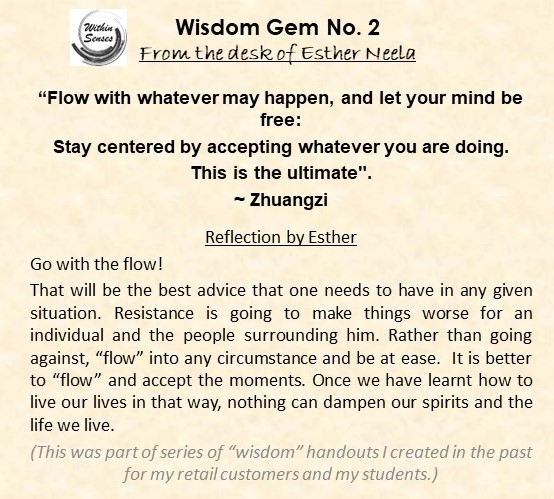
“Flow with whatever may happen, and let your mind be free: Stay centered by accepting whatever you are doing. This is the ultimate”. ~ Zhuangzi
Reflection by Esther Go with the flow! That will be the best advice that one needs to have in any given situation. Resistance is going to make things worse for an individual and the people surrounding him. Rather than going against, “flow” into any circumstance and be at ease. It is better to “flow” and accept the moments. Once we have learnt how to live our lives in that way, nothing can dampen our spirits and the life we live.
(This is a re-post. Will be continuing the “Wisdom Gem series” for every Friday. This was part of series of “wisdom” handouts that was created in the past for my retail customers and my students.)
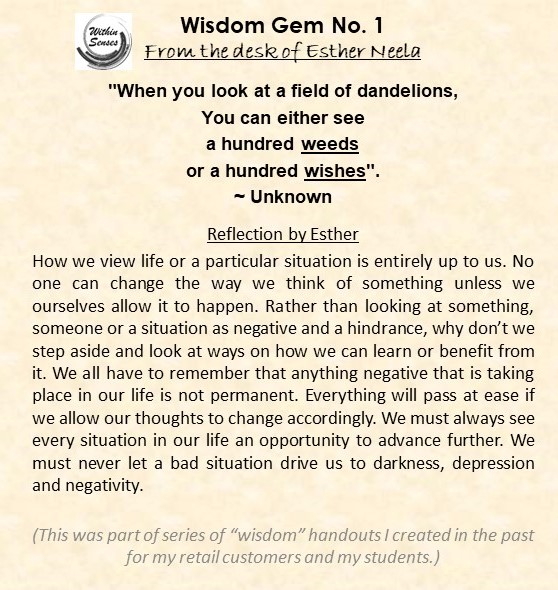
“When you look at a field of dandelions, You can either see a hundred weeds or a hundred wishes”. ~ Unknown ~
Reflection by Esther How we view life or a particular situation is entirely up to us. No one can change the way we think of something unless we ourselves allow it to happen. Rather than looking at something, someone or a situation as negative and a hindrance, why don’t we step aside and look at ways on how we can learn or benefit from it. We all have to remember that anything negative that is taking place in our life is not permanent. Everything will pass at ease if we allow our thoughts to change accordingly. We must always see every situation in our life an opportunity to advance further. We must never let a bad situation drive us to darkness, depression and negativity.
Each of us must try to get active for 30-45 minutes each day. There are many ways to get active indoors. Some of the ways will be through qigong, tai chi, yoga, meditation, home exercise types of equipment such as the treadmill, etc.
The lesser things you have, the more positive energy flows in. Are there things that need cleaning/clearing at your surroundings, closets, kitchen cabinets, etc.? When you are focused on cleaning/clearing, it will relieve you from the stress.
Focus on hobbies that increase your creativity. When your creativity levels are high, there is no place for stress and negativity. There are many online options available.
Spend more time with the plants and feel connected and grounded to nature. Some things you can consider is to grow a new type of plant, repot an existing plant or redecorating your garden space.
Are you feeling angry and stressed? You can always write out your thoughts and feelings in a journal. By doing that, not only you are releasing all anxiety to the paper, you are lightening the load from yourself.
With all the panic buying and stockpiling, this can be a bit challenging. Let’s be creative and create simple dishes or bake new items to try.
9. House Improvement Works
You can consider repainting your home or doing some simple home improvement works. And if you are intending to paint walls, why not use the stencils and get creative?
Do you still have old books stored away? It will be a good time to get them to re-read. If your nearby library is closed, you can also consider reading the electronic version of books.
12. Origami
A standard size paper of 75 x 75mm and you can make amazing crafts. It is a fantastic activity for the whole family. But do take note that origami paper comes in several sizes.
Daily, all of us are receiving news of the coronavirus and how the numbers are increasing around the world. While this is no easy news to digest, this is also not the time to discriminate against a group of people and/or country. In this difficult time, all of us must be calm and positive. We should make a point to turn all negative energy into positive energy through prayers, compassion and thoughtfulness.
Below are various articles on suggestions as to how we can better manage the current crisis. Let us all come together as one united family to assist each other in this difficult time.
Amid “darkness” and confusion over the virus, there is still hope…and every single hope begins with each one of us.
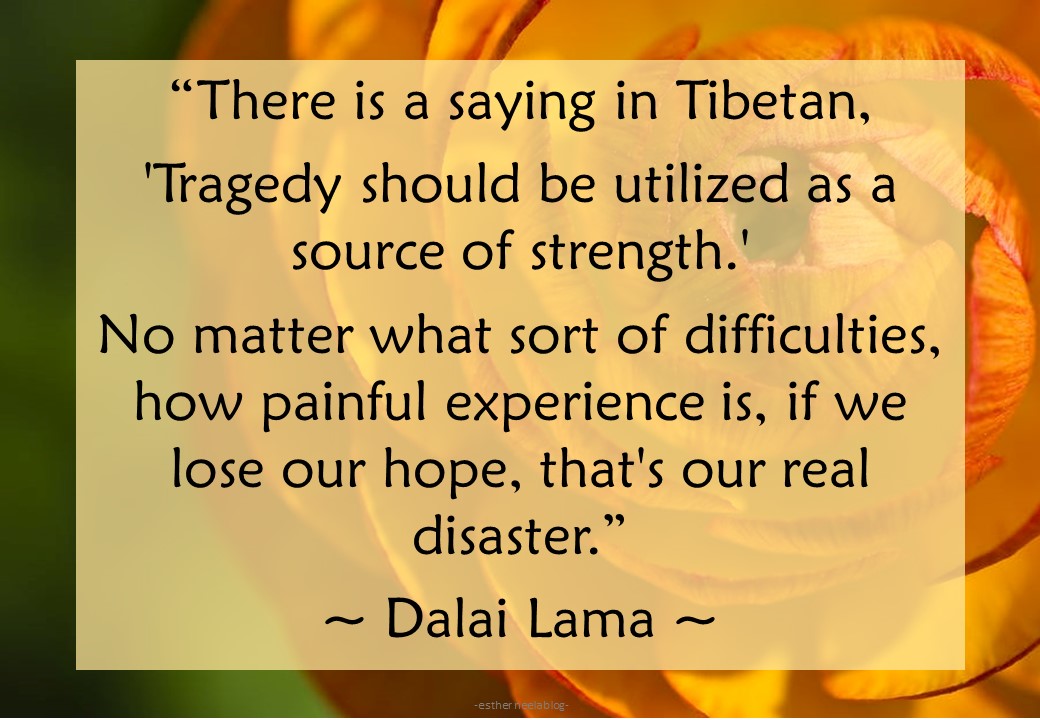
“There is a saying in Tibetan, ‘Tragedy should be utilized as a source of strength.’ No matter what sort of difficulties, how painful experience is, if we lose our hope, that’s our real disaster.” ~ Dalai Lama ~